
ALL four dry docks at the former Smith's Dockyard on Teesside were full this week for the first time since the 1980s under one operator, following major investment by UK Docks Marine Services.
The milestone is positive news for the port and Teesside, underscoring a bright future for ship repair and maintenance on the river.

All four docks full at UK Docks Teesside.
It marks a significant step in the family-owned company's 12-year journey, which began when it leased and revived two dry docks at the ex-Smith’s Yard in 2014.
Last year, UK Docks agreed a long-term lease with PD Ports on the adjacent shipyard, which includes an additional two dry docks, repair quays, engineering and fabrication workshops, and extensive laydown areas, and has fully refurbished them.
The company's successful expansion in 2025 meant the well-known Smith's yard came under a single firm's ownership for the first time since the iconic name closed its doors in 1987.
This week, the dry docks were occupied by the multi-purpose offshore vessel Atlantic Guardian, the Tees river tug Svitzer Alma, the suction dredger City of London, and the ex-Royal Navy ship HMS Enterprise.
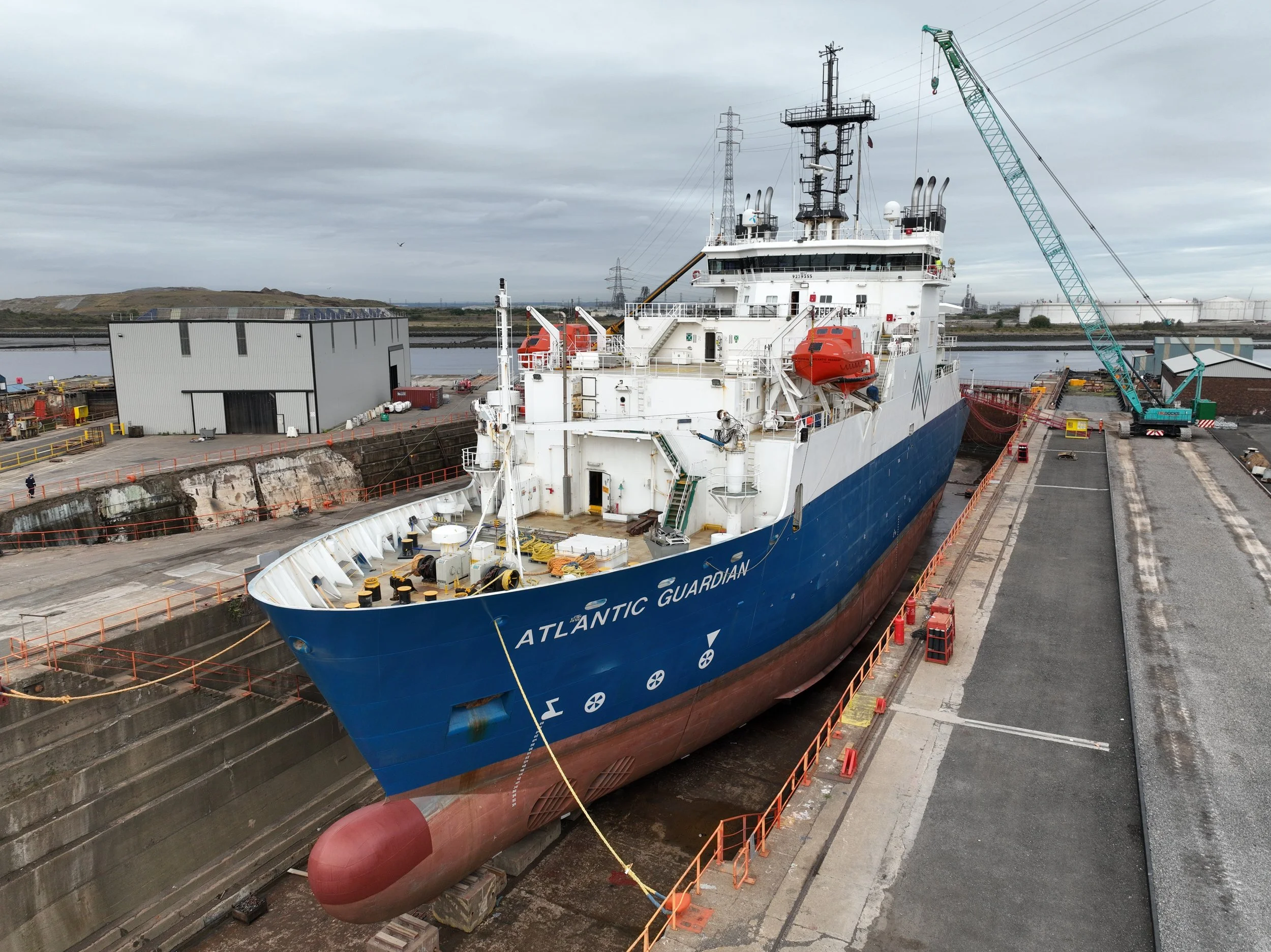
The multi-purpose offshore vessel, Atlantic Guardian, is one of four currently filling dry docks on UK Docks Teesside.
Meanwhile, a survey vessel and a patrol vessel were carrying out afloat repairs, moored on the Yard’s East and West Quays.
This week's full-house yard was a proud moment for UK Docks’ founder and executive chairman, Harry Wilson MBE, who helped drive that first move into Teesside more than a decade ago.
He said: “I know how big a name Smith’s Dockyard was for a lot of people in Middlesbrough - different generations worked there across almost the whole of the 20th century - and I hope they’re delighted to see the site thriving again under one owner.
“We’ve always believed in the UK’s marine industry, and while others were closing down yards over the years, we were seeking to reopen them and develop them further.
“UK Docks has put so much time and effort into our Tees operation, and I want to thank all those involved who have proved that there’s a demand and capacity for a major ship repair and maintenance facility on the Tees."
Last year’s expansion not only trebled UK Docks’ footprint on the Tees from five acres to 16.5 acres, it also consolidated UK Docks’ position as the largest, independent, family-owned ship repair and maintenance company in the country.
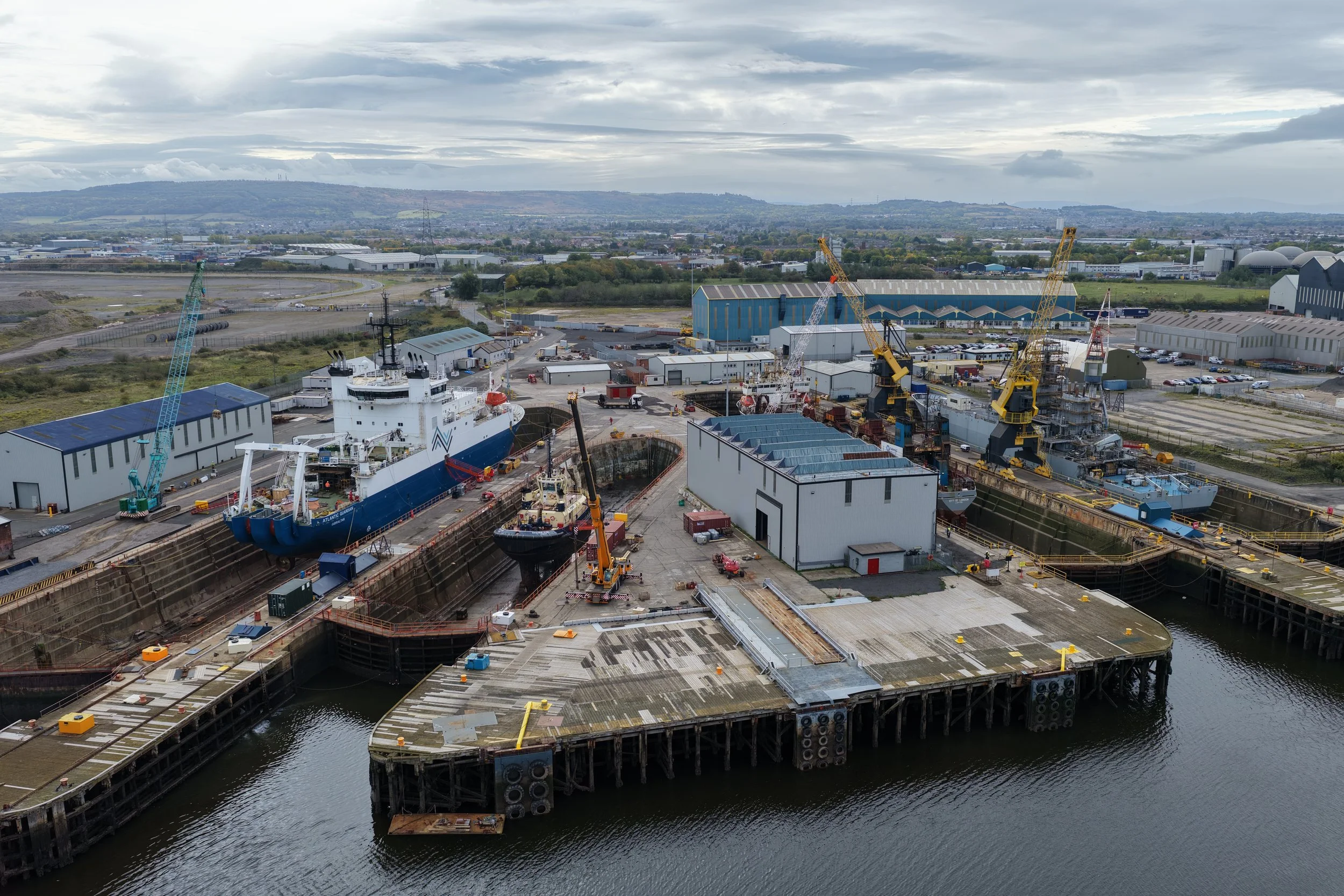
The bigger picture - a multi-million pound investment has been made in infrastructure at UK docks Teesside.
Established by the Wilson family on a single slipway in South Shields in 1992, UK Docks expanded to revive boatyard and ship repair sites at Cremyll and Gosport on the South Coast, as well as Teesside.
Harry’s sons, Chris, Gary and Jonathan, worked alongside him as the company grew and are now directors.
They see this week’s landmark on Teesside as a new beginning, as much as it is an end.
Managing director, Jonathan Wilson, said: “It’s great that we’ve had the shipyard fully operational across four dry docks this week, but we want that to become the norm, rather than the exception.
“It’s one thing to restore and refurbish a shipyard, but it’s another to make sure it has full order books and sufficient work for the workforce and the contractors and sub-contractors in the supply chain who also benefit from the business we generate.
“We want to get the message out there, far and wide, that we have four dry docks, heavy lift quay space and highly skilled staff, fully operational for defence or commercial ships from the UK and international clients.

UK Docks MD, Jonathan Wilson - ‘We see a lot of potential and possibilities in the site.’
“It’s a new facility in a way, thanks to a multi-million-pound investment into the facility, workshops, craneage and operating equipment and because we’ve extended our services, our capacity and our infrastructure, to create a sizeable and fully-modernised yard.
“I’d like to congratulate everyone at UK Docks for the efforts they have put in over the last 18 months, as well as all those outside companies that have worked with us to make this happen."
UK Docks’ first two dry docks, which had to be emptied of decades of waste, measure 137 metres by 18.6 metres (No. 4 Dock) and 167 metres by 20.5 metres (No. 3 Dock) and include a fully equipped repair berth, cranes, workshops, and a storage facility.
The two added docks measure 175 metres by 22.5 metres and 120 metres by 17.5 metres, and the larger dockyard will allow UK Docks to tender for a broader range of vessels.
In addition, the new yard offers lay-by berths and an extra 200 metres of quay space, with the company renovating workshops, updating and repairing machinery, and investing in the yard's layout and appearance.
The goal now is to make Teesside an even more important destination for ship maintenance and repair, nationally and internationally, in the years ahead, launching a new era for marine services and repair on the Tees.
Jonathan said: “We see a lot of potential and possibilities in the site and have a five-year plan to maximise it as an asset.
"We are a service centre supporting that huge and growing industry all across the North Sea and beyond, hopefully bringing business to the yard for many years to come."
“Having four docks will allow us to look for new opportunities and expand on our existing services and facilities.
“As well as hoping to attract new customers, the new docks will benefit our existing customers because there are times we have to schedule with two docks and having four docks means there will be additional dry dock space for customers when needed.
“It will make our operation more efficient, increase our workforce and enable us to increase our market.”
The site is expected to handle equal amounts of commercial and defence work.
Alongside the long-term commercial side of its business, Royal Navy contracts have also become a major part of UK Docks' business, with regular visitors to Teesside in recent years including HMS Protector, the ex-HMS Enterprise and HMS Echo, as well as HMS Forth.
The expanded site is expected to enhance tenders for future defence contracts and support commercial growth in the North Sea.